
UK Bra Sister Sizes Chart & Guide | Find Your Perfect Fit
Have you ever tried on a bra where the cups fit perfectly, but the band was just a little too tight or too loose? It’s a frustratingly common problem, and it often leads to women giving up on what could have been the perfect bra.
But what if there was a simple trick to solve this? There is. Welcome to the world of sister sizing.
This guide will demystify one of the most useful concepts in bra fitting. Understanding how bra sister sizes work is a true game-changer, giving you the power and flexibility to fine-tune your fit and find comfort you never thought possible.
What Are Sister Sizes?
In the simplest terms: Sister sizes are different bra sizes that have the exact same cup volume.
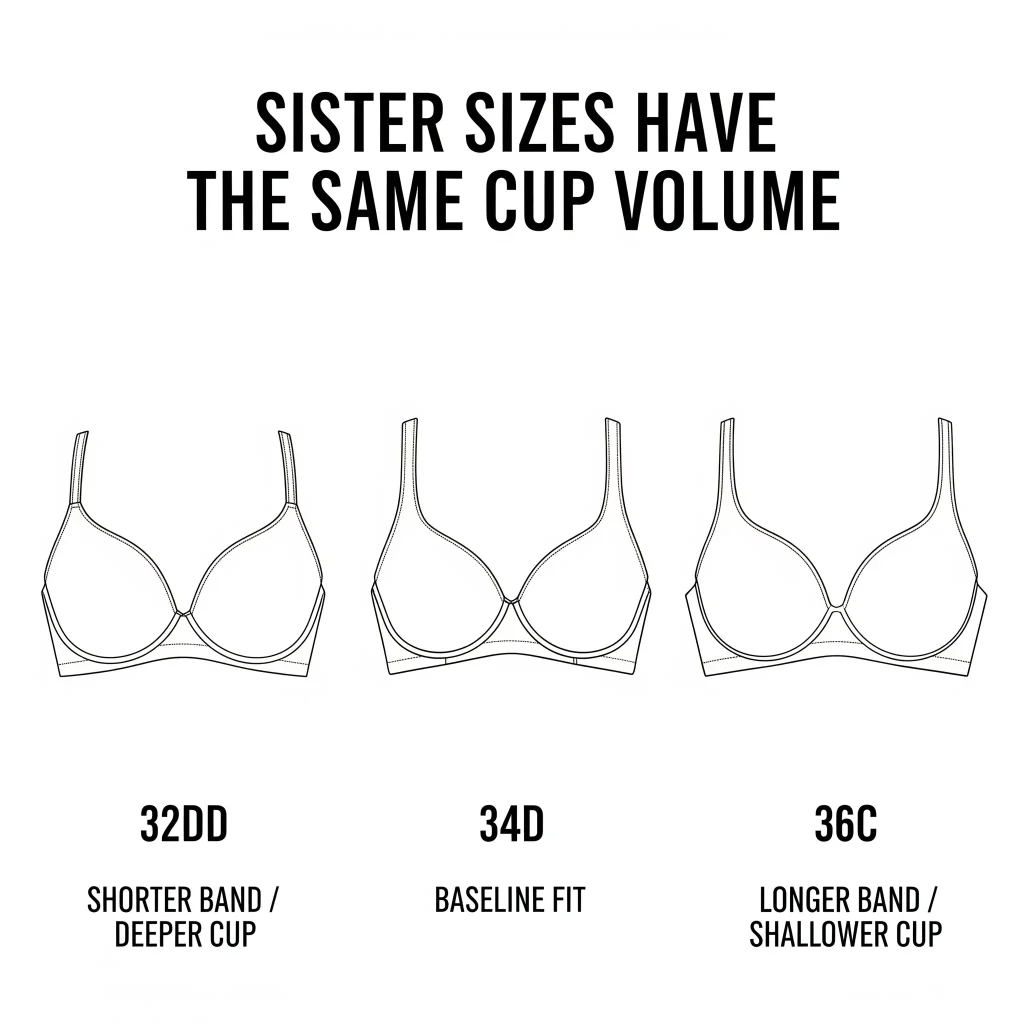
The cup letter (like D, E, F) does not represent a fixed size. The actual volume of a “D” cup on a 32 band is much smaller than the volume of a “D” cup on a 38 band. Sister sizing is the system that explains this relationship.
The core rule is simple:
- When you go UP one band size, you must go DOWN one cup letter to keep the same cup volume.
- When you go DOWN one band size, you must go UP one cup letter to keep the same cup volume.
For example, the sizes 32DD, 34D, and 36C are all sister sizes. They all have the same cup volume, but are designed for different ribcage measurements.
The UK Sister Size Bra Chart
Use this chart to easily find your sister sizes. First, find your recommended size from our bra size calculator, then look left and right to find your alternatives.
Go Down a Band (Snugger Fit) | Your Starting Size | Go Up a Band (Looser Fit) |
|---|---|---|
30B | 32A | 34AA |
30C | 32B | 34A |
30D | 32C | 34B |
30DD | 32D | 34C |
30E | 32DD | 34D |
30F | 32E | 34DD |
32C | 34B | 36A |
32D | 34C | 36B |
32DD | 34D | 36C |
32E | 34DD | 36D |
32F | 34E | 36DD |
32FF | 34F | 36E |
34D | 36C | 38B |
34DD | 36D | 38C |
34E | 36DD | 38D |
34F | 36E | 38DD |
34FF | 36F | 38E |
34G | 36FF | 38F |
36DD | 38D | 40C |
36E | 38DD | 40D |
36F | 38E | 40DD |
36FF | 38F | 40E |
36G | 38FF | 40F |
36GG | 38G | 40FF |
When Should You Use a Sister Size?
Sister sizing is a problem-solving tool. Here are the two most common scenarios where it becomes essential.
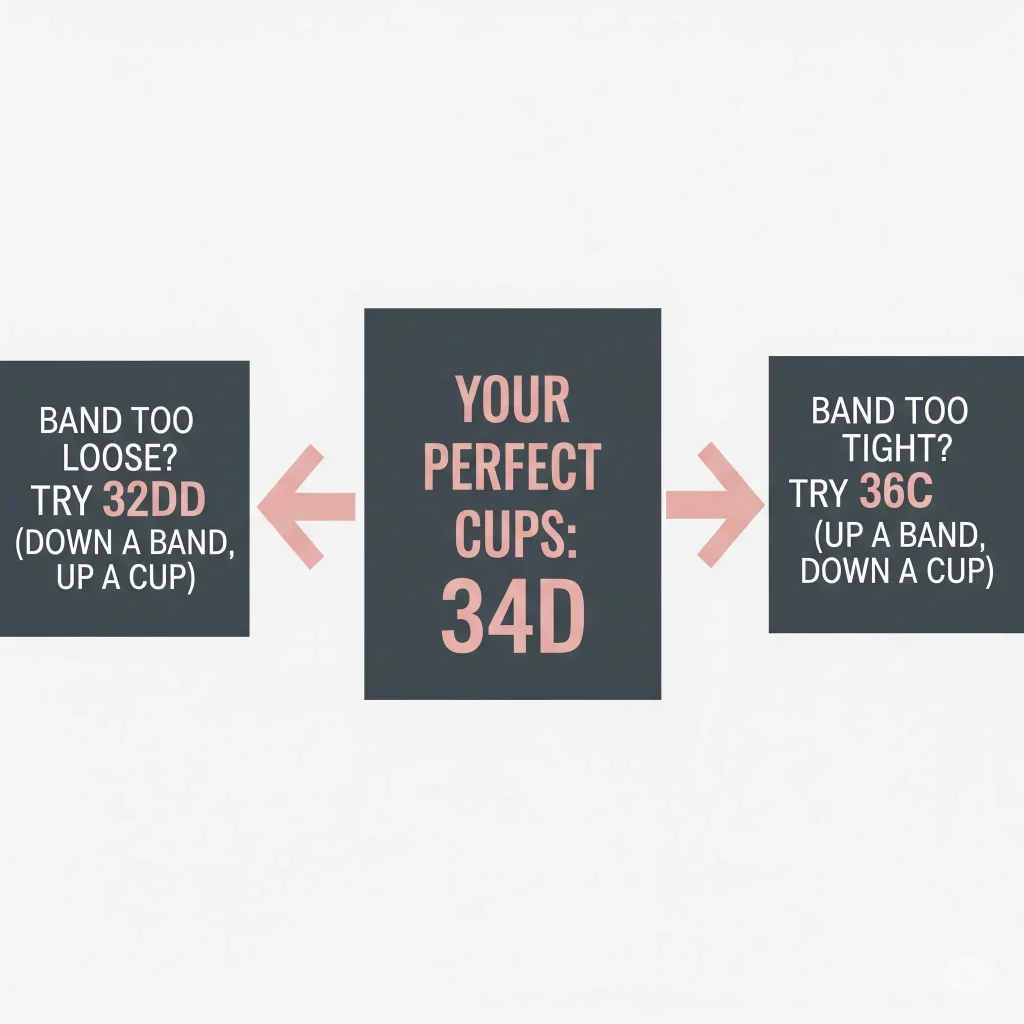
Scenario 1: The cups fit perfectly, but the band is too loose.
This is a classic sign you need to sister size down. You’re likely experiencing problems like your band riding up your back or your straps digging in because the band isn’t providing enough support.
- The Solution: Go down one band size and up one cup letter.
- Example: If you are trying a 36D and the cups are perfect but the band is loose, your next size to try is a 34DD.
Scenario 2: The cups fit perfectly, but the band is too tight.
If the band feels uncomfortably snug, digging into your ribs even on the loosest hook, you should sister size up.
- The Solution: Go up one band size and down one cup letter.
- Example: If you are trying a 32E and the cups feel great but the band is far too tight, your next size to try is a 34DD.
A Quick Word of Caution
While sister sizes have the same cup volume, the shape of the cup and the width of the underwire can change slightly. A 32DD will have narrower-set wires than a 36C. Always check how the new size feels and make sure it solves your original fit problem without creating a new one. For more information, check our Ultimate Guide to Bra Fit Problems.
Conclusion
Understanding sister sizing is like having a secret superpower in the fitting room. It gives you the flexibility to prioritise a perfectly snug and supportive band—which provides 80% of a bra’s support—while keeping the cup volume you know works for you.
If you’re unsure of your starting size, the first step is always to get a reliable measurement. Use our accurate UK Bra Size Calculator to find the perfect starting point for your fitting journey.